This is not an official history from Dubreq, it has been independently compiled by me (an overly obsessed stylophone collecting idiot!) from information gathered through many sources including memories, patents and old advertising copy.
* All dates herein are approximate, though believed to be fairly accurate *
A Brief History of Dubreq Synths:
In 1968:
The first Stylophones were launched (Thanks to a broken toy piano, which will be explained later). This battery powered hand held analogue synth with its unique method of playing, by running a stylus up and down a plated circuit board, took the world by storm.
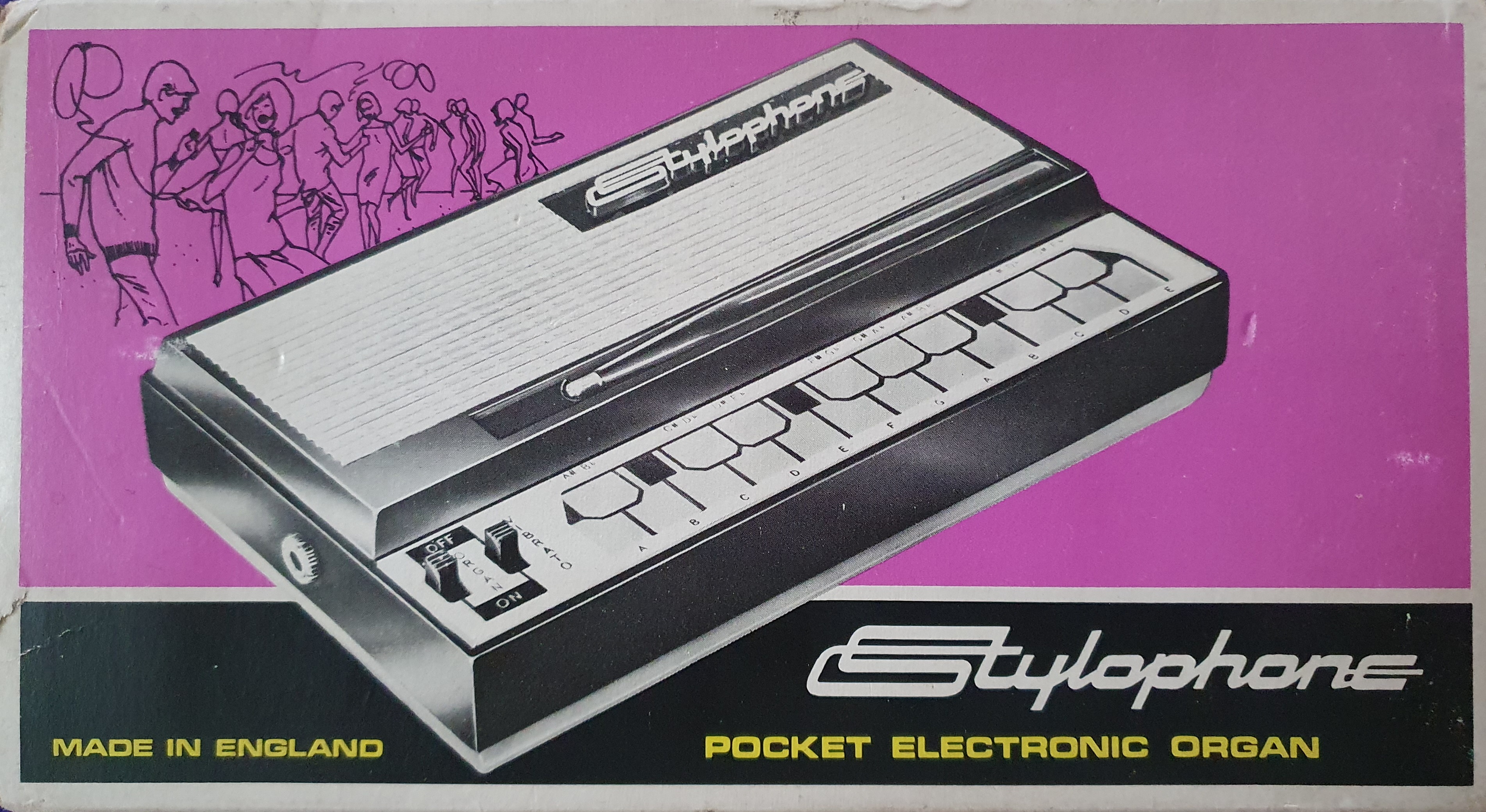
Between 1968 and 1985 there were 2 revisions to the original release.
Revision 1 Stylophones were produced from 1968‐1970 and had gaps in the keypad. There were 2 variations, The earliest ones (1968) had the board and speaker screwed with flat headed screws into brass inserts which were molded into the plastic. Later ones (69 & 70) had larger cross head screws, screwed directly into the plastic.
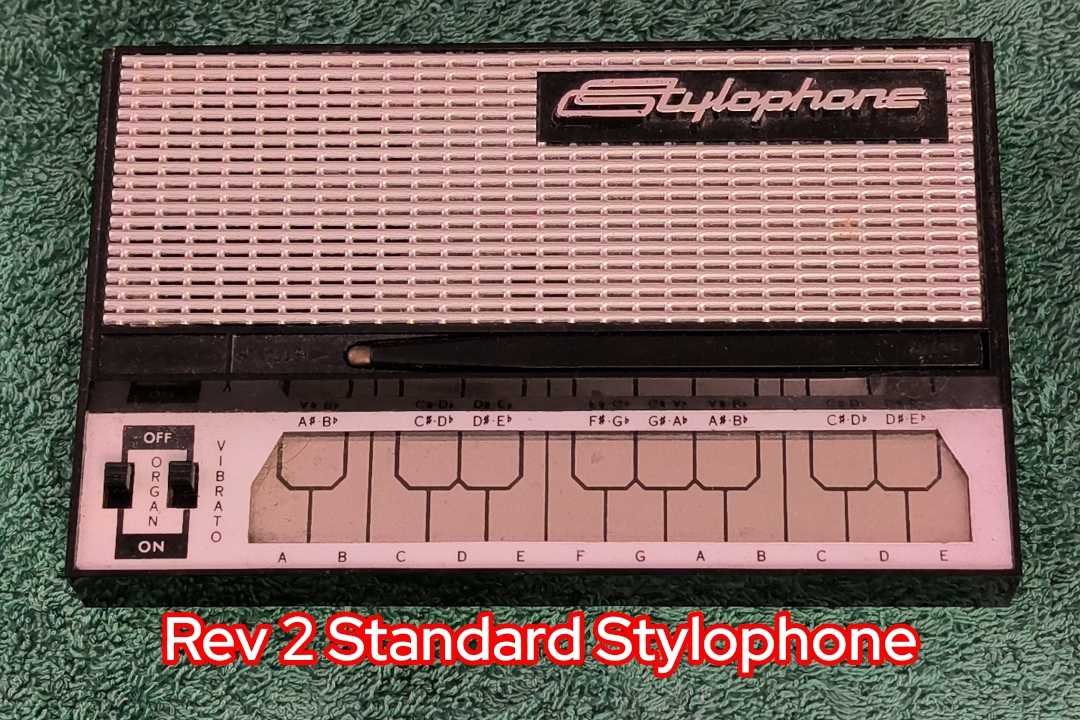
Revision 2 were produced from 1970-1975, they were basically the same as the later rev 1s, but without the gaps in the keypad.
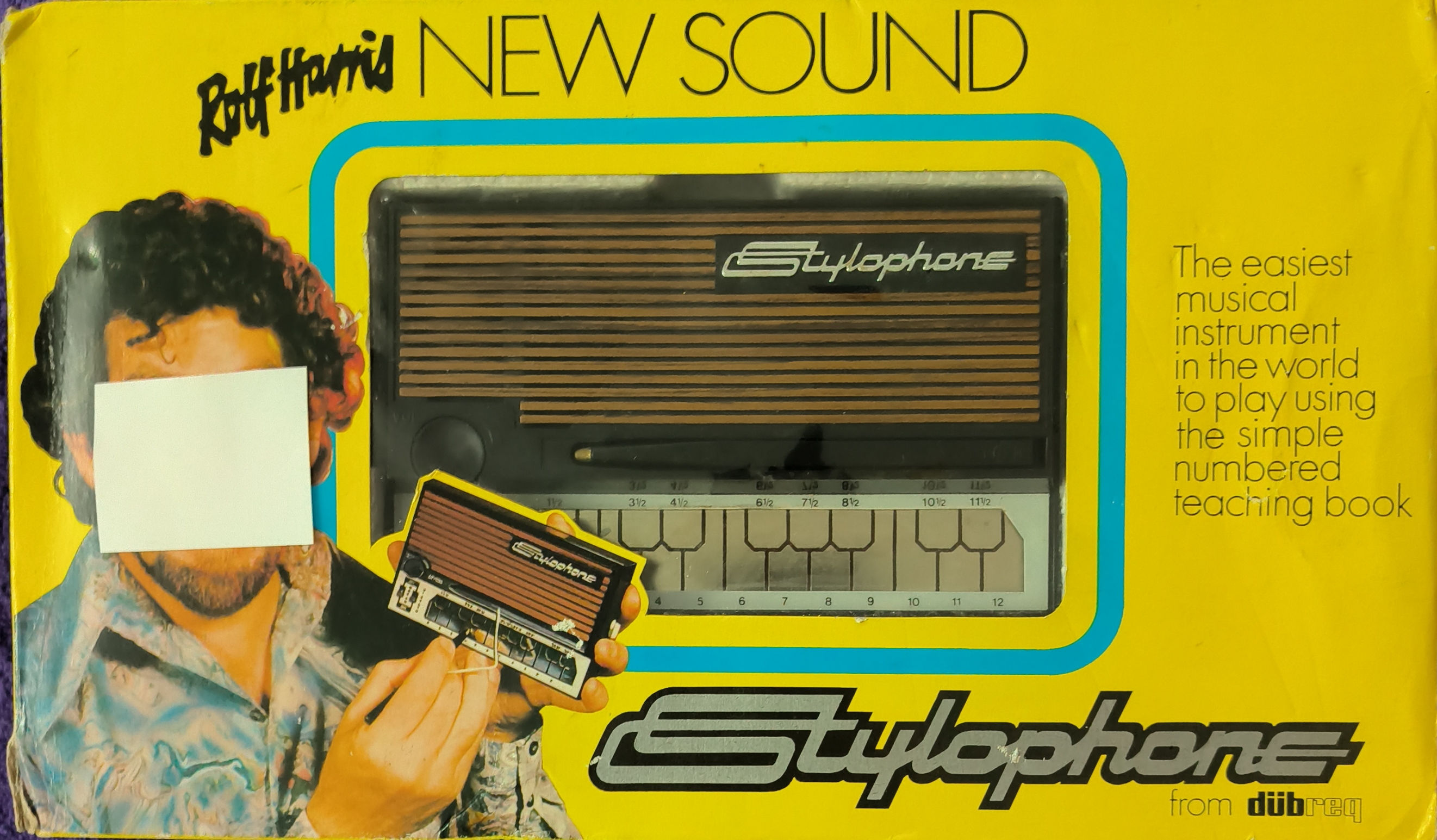
Revision 3 were produced from 1975-1985, they are quite different, having 2 small resistor packs instead of individual resistors for the notes. These were known as 'Rolf Harris Stylophones', with his name and picture being printed on the outer boxes.
There were also bass and treble Stylophones. The 'standard' Stylophone is black and white in colour with a silver grille. Treble stylophones started out as all white with a black grille, then became all white with a silver grille for rev 3.
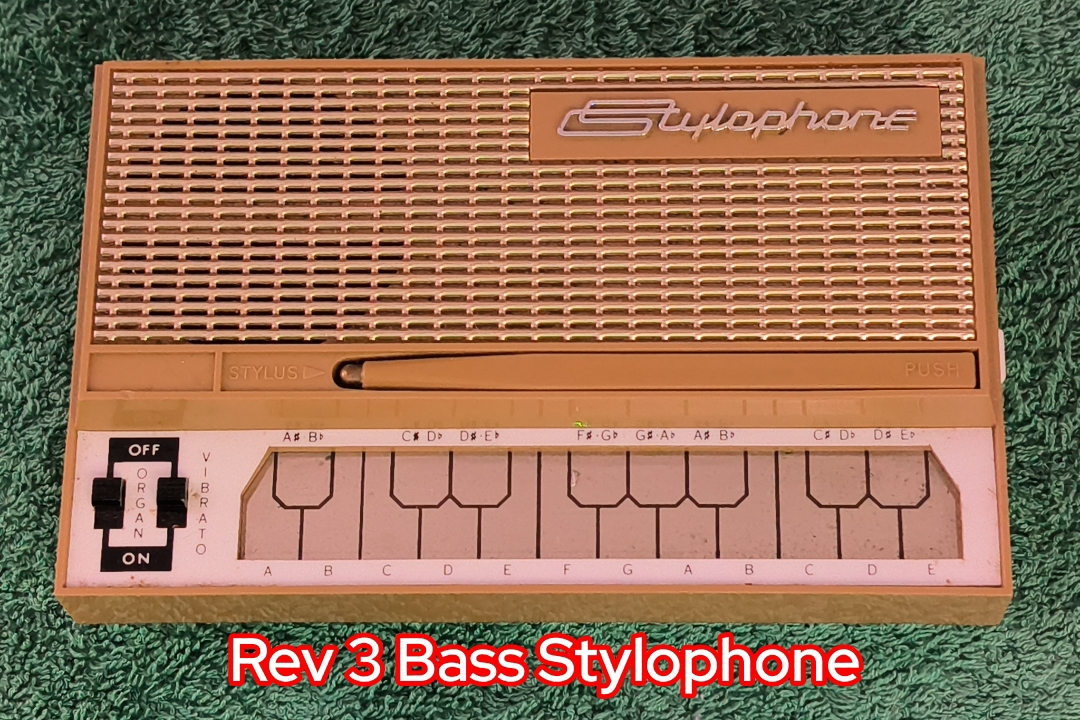
Bass stylophones are a bronze/light-brown colour and have gained the nickname 'gold stylophone' due to this. The bass stylophones never really worked very well due to the way the oscillator produced the notes (and probably not helped by the small size of the speaker!). In comparison, not many bass stylophones were sold and they are now quite rare indeed.
Around 1972:
They released the 'Piano Mate. It seems they may have re-released it in '74 too, if any of you have more information on this please contact me.
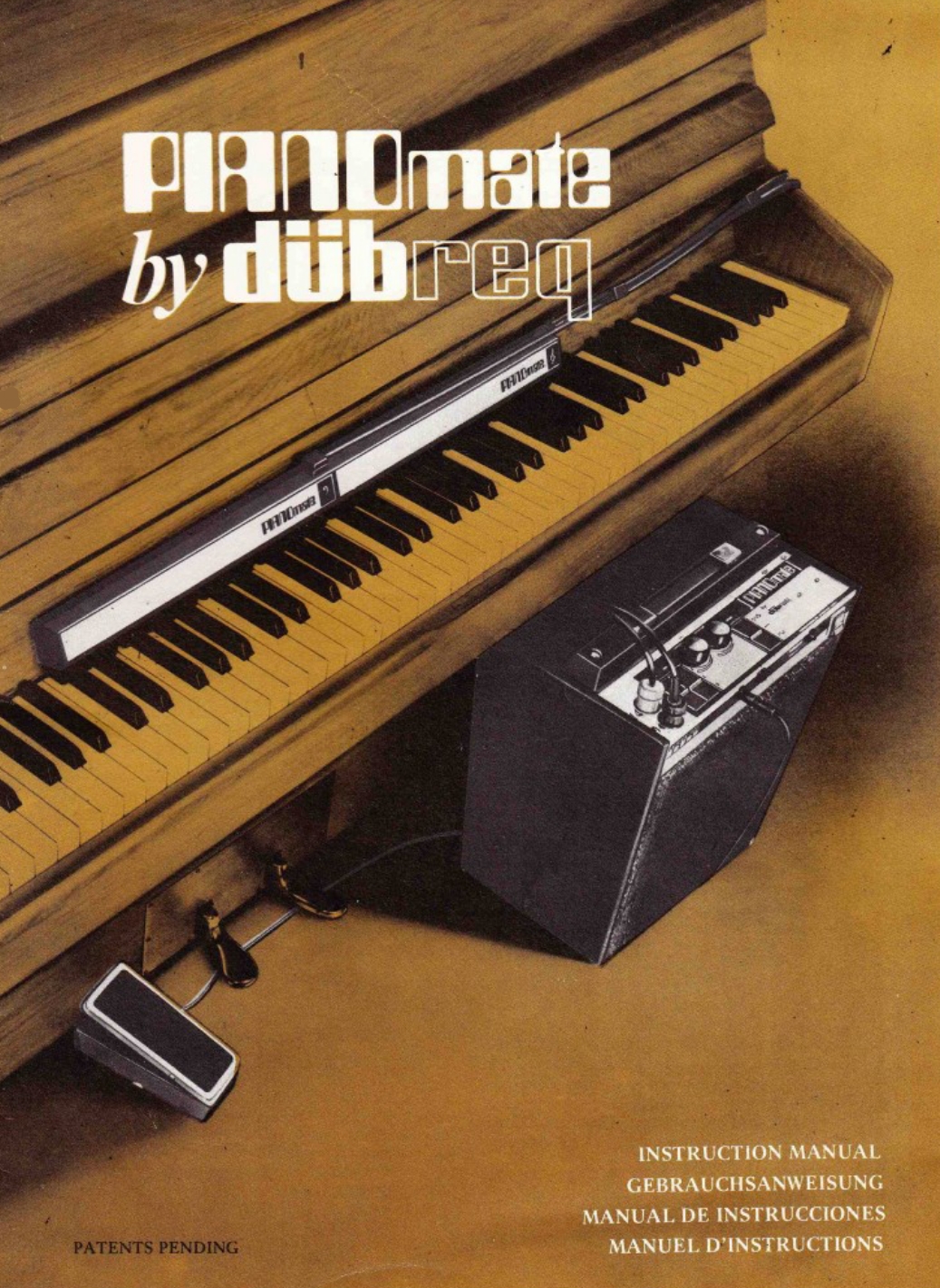
The Piano Mate is a quite weird poly-synth that didn't have a keyboard. It has 2 attachments, treble and bass keyblocks (or whatever they are officially called) that sit atop a standard piano and the synth sound is mixed with the standard piano sound. These did not catch on and not many were made AFAIK. They are quite rare, but do come up for sale now and again. (Video on my youtube channel: Click Here!)
Around 1975:
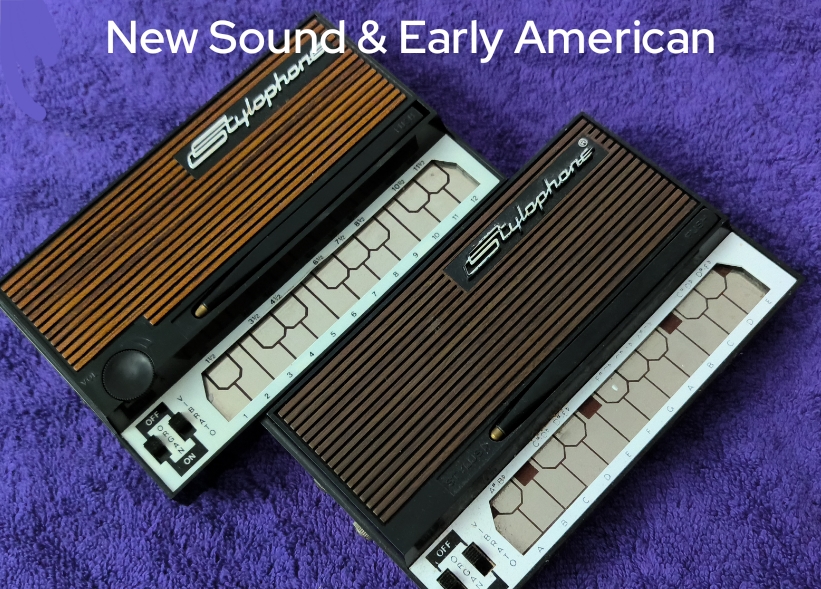
The 'New Sound' Stylophone was introduced. Its name coming from it now having a square wave oscillator, which gave a very different tone to the original ones. The new sound had a volume control, a vital addition that was for some reason omitted on the originals.
The New Sound had a wood effect grille, which was completely different than the other British Stylophones, yet resembled the early American licensed stylophones which were made in Chicago, and also had a wood effect grille.
Around 1977 1975:
The Stylophone 350s was produced.
*New information*
It appears that the date of 1977, which was deemed to be correct by myself and many sources, is incorrect. Thanks to Lewes who found an old 350s in an attic, we now know the release date was 1975. The modern Dubreq website just says 'mid 70s'.

The 350s takes some of its design ideas from the Piano Mate, and I feel they were trying to resurrect the failed Piano Mate in a new form, but unfortunately the 350s didn't take off either. It is a big, somewhat ugly synth that is quite difficult to actually play properly with its dual styli (or styluses if you prefer).
The 350s had a very similar wood effect grille to the New Sound, only about 6 times bigger of course!
Although there were said to be only about 3 thousand 350s units produced, there were several board revisions: The original early ones had the number 6510 on the board, then there was 6510A and 6510B. Recently I have found out about another revision of the board, the 6510C. It's possible the 6510C may have been an American only release, as one I saw had an American addressed guarentee card with it.

350s units with the 6510C board revision also seem to have a 3.5mm 'battery eliminator' socket fitted. I have only ever seen pictures of 2 units with the 'battery eliminator' socket installed, so if any of you have more information on this, please contact me.
Around 1985:
Dubreq sadly had to close their doors and no more Stylophones were made. I can't help wondering what would of happened if the Piano Mate would of had a proper keyboard instead of having to be used with a Piano. It would certainly of made it more portable, since a piano is too big and heavy to easily carry from gig to gig.
So what about the Toy Piano?
In 1967, Brian Jarvis, co-founder of Dubreq Studios was asked to repair a toy piano for his neice. When fixing it, he discovered it was a plinky-plonky pile of rubbish, he thought something like: 'I'm sure I could make something better than that!'
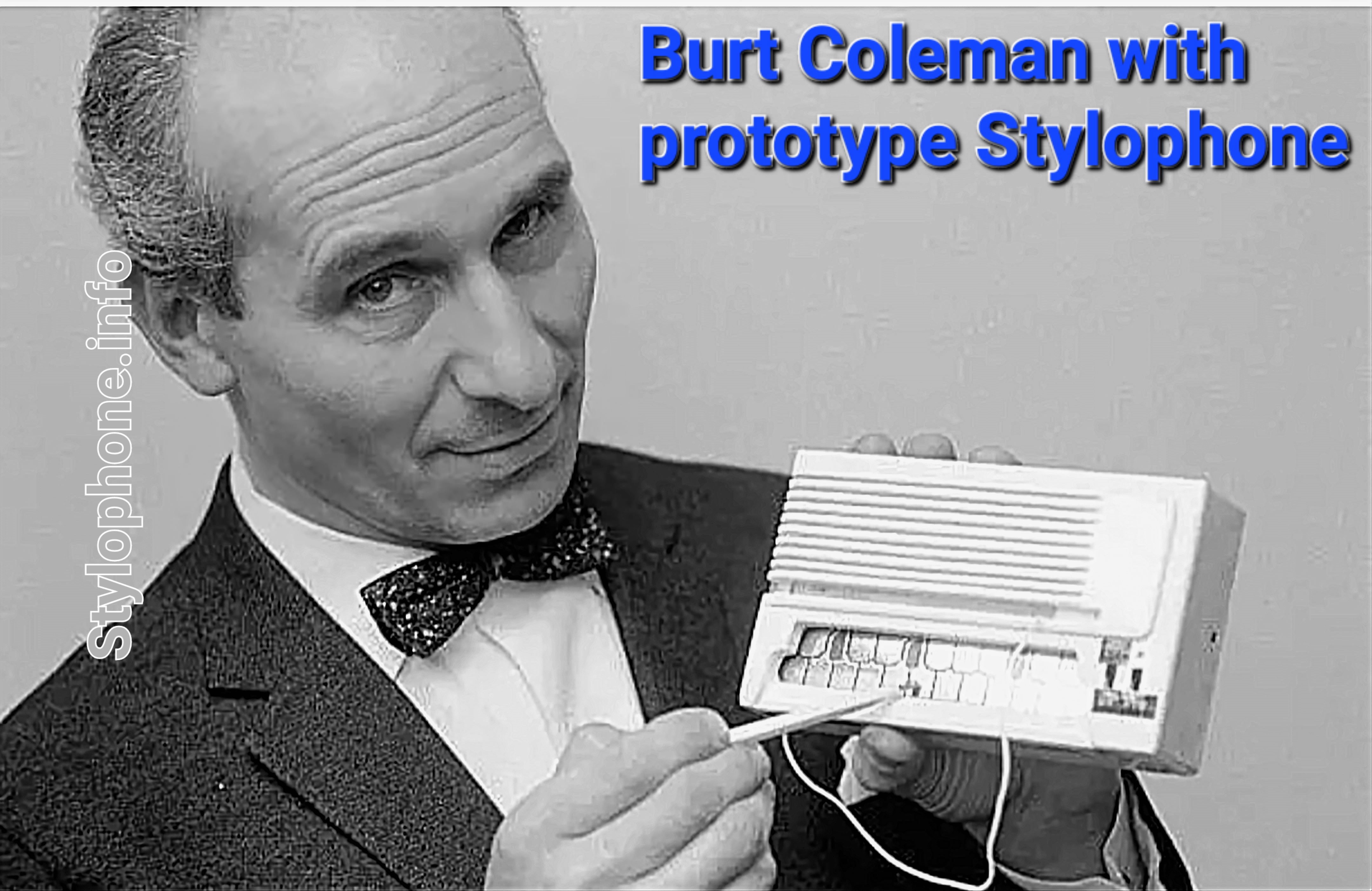
So, he got with his mate of the time, Dubreq Studios co-founder Burt Coleman and they designed the prototype Stylophone.
Between 1968 and 1985 over 4,000,000 (yes, that's 4 Million!) Stylophones were sold all around the world!
Every Stylophone fan needs to thank Brian's neice for breaking her toy piano, because without that, we would not have had the wonderful little music making device we all know as the Stylophone. -Thanks Neice!
Design and Content is Copyright of N.D.Green
(stylophone.info) ©2017 - | Top